EDO GARDENS: The Magic of Space & Time
1. Japanese Gardens are Landscape Design
Unlike European gardens, which are usually organized in geometric patterns for perfect symmetry, Japanese gardens are designed to create a landscape that unfolds scene by scene, following the visitor’s line of sight. They are “experiential landscape devices,” where every step triggers a small scene change, carefully calculated to account for the height of the viewer’s gaze, the turn of a corner, and even the sound of water or the scent of the wind.
The Edo period marked a time when battles diminished, ushering in a golden age of Japanese garden culture as daimyo competed to create magnificent gardens throughout the country.
2. Stroll Gardens: Where the View Changes with Every Step
The gardens feature a continuous sequence of highlights—small paths circling the central pond, artificial hills that shift the viewer’s line of sight, bridges, and rest houses. The landscape seamlessly shifts before the viewer’s eyes, perfectly synchronized with their walking pace.
Koishikawa Korakuen Gardens in Tokyo is a prime example. Centered around a large pond, it features a connected cycle of mountain, river, and rural scenery, transforming the view completely every few dozen steps. The act of walking itself becomes the appreciation of art.
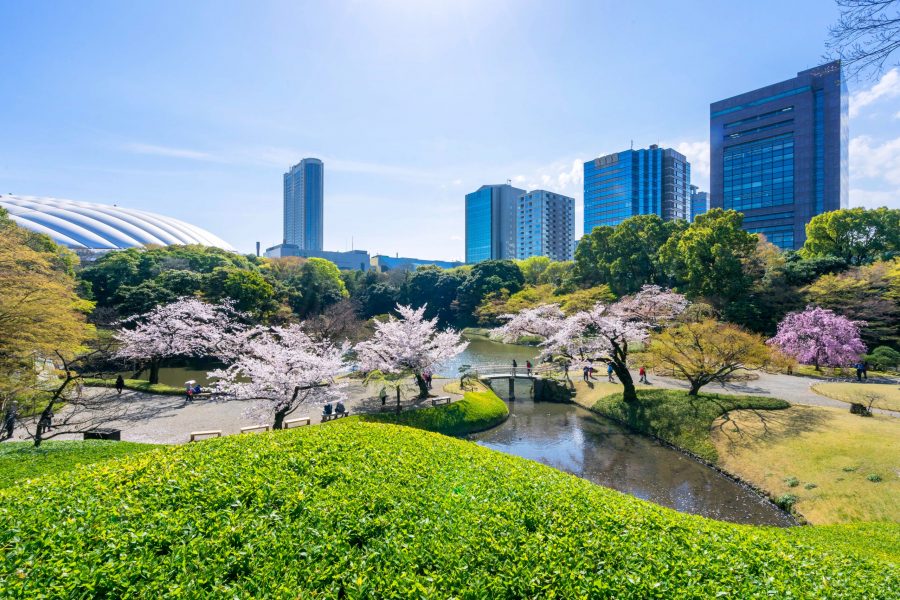
Koishikawa Korakuen Gardens (Tokyo)
3. Shakkei (Borrowed Scenery): Bringing Outside Scenery into the Design
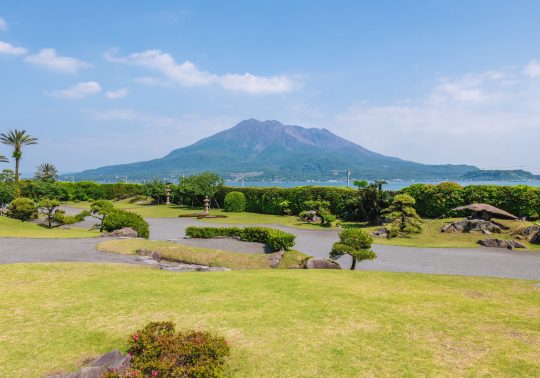
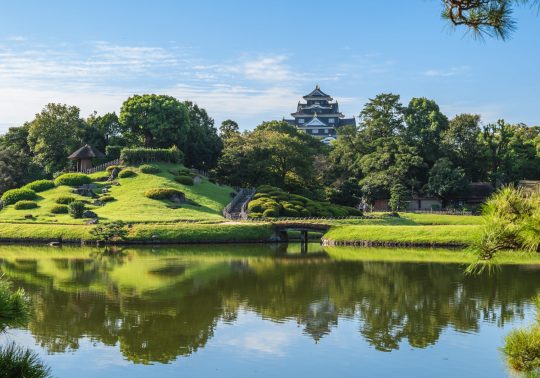
Shakkei is the technique of borrowing elements from outside the garden—such as mountains, the sky, or castles—and integrating them into the garden’s design. This technique connects the foreground (things like pines or stones), the middle ground (things like the pond or artificial hills), and the distant view (things like an external mountain or castle) in three layers, creating a profound sense of depth within a limited space.
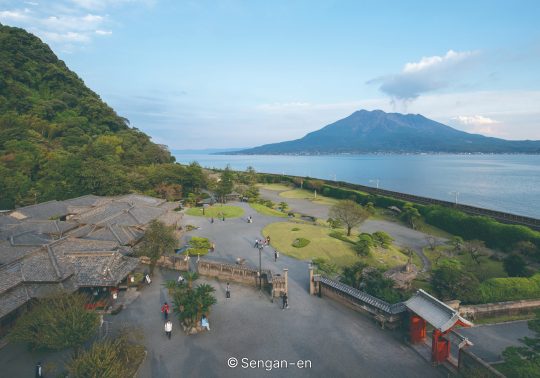
At Okayama Korakuen Garden in Okayama Prefecture, Okayama Castle overlaps the pond, islands, and artificial hill, achieving a magnificent composition that unites the garden and the castle. At Sengan-en Garden in Kagoshima Prefecture, the majestic Sakurajima volcano and Kinko Bay are used as the main scenery, incorporating the volcano’s smoke and sea mist as unique in-the-moment appearances.
The fundamental idea perfected by these master gardeners was to eliminate the distinction between the inside and outside of the garden.
-

- Sengan-en Garden (Kagoshima Prefecture)
-
- Okayama Korakuen Garden (Okayama Prefecture)
4. Shioiri (Sea Inlet): Inviting the Ocean’s Rhythm into the Garden
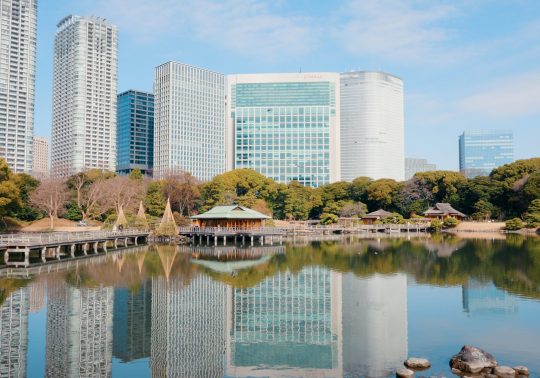
The shioiri (sea inlet) style is a unique Edo-era garden form where the tidal ebb and flow of seawater are introduced into the central pond. This allows the changing water level and ripples to continually alter the landscape.
At Hama-rikyu Gardens in Tokyo, the scent of salt, the movement of the water’s surface, and even the phases of the moon become elements of the view, allowing the visitor to experience a sense of unity between the garden and nature. Yosuien Garden in Wakayama Prefecture also features a structure connected to the sea, demonstrating the garden’s concept as an “open vessel.” If shakkei borrows external space, shioiri can be seen as borrowing time—the rhythm of the tides.
-
- Hama-rikyu Gardens (Tokyo)
-
- Yosuien Garden (Wakayama Prefecture)
5. The Stroll of Time: How Seasons Redraw the Garden
A Japanese garden reveals a different face with every season and even throughout the changing light of a single day. The morning mist, the midday glare, the shadows of dusk—visiting at a different time means encountering a completely different garden.
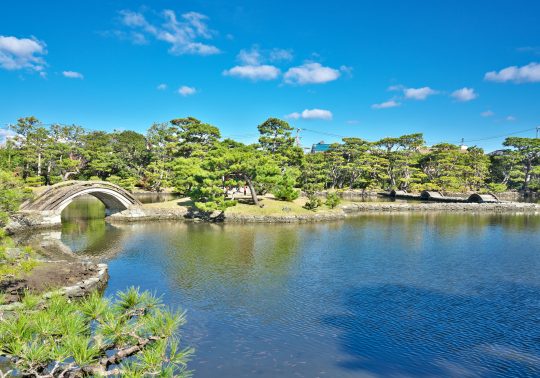
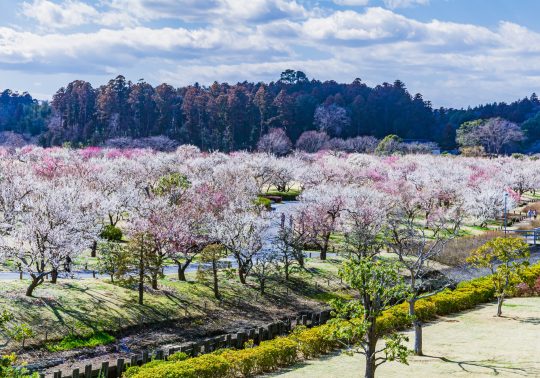
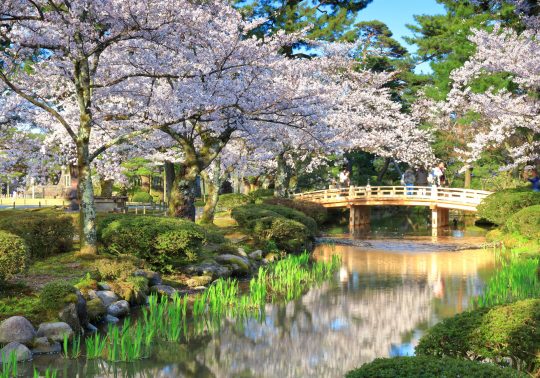
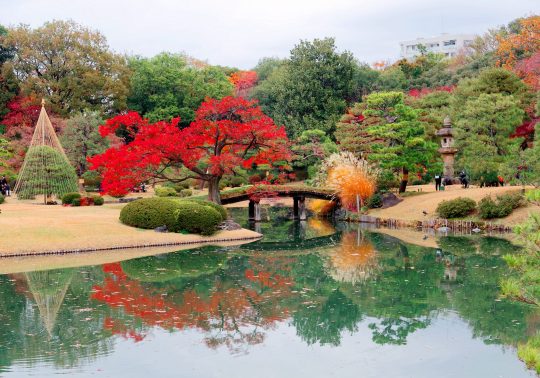
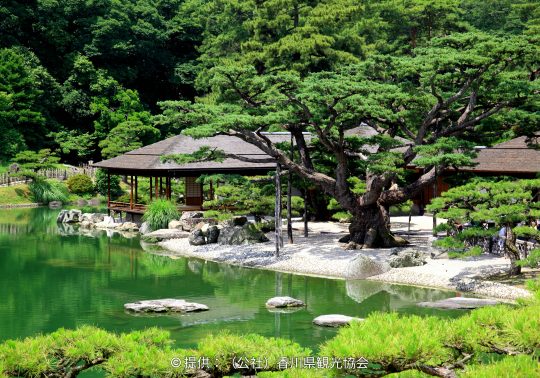
Kairaku-en Garden in Ibaraki Prefecture is famous for the 3,000 plum trees (about 100 varieties) that bloom in early spring, but the park remains vibrant with seasonal flowers afterward. At Kenroku-en Garden in Ishikawa Prefecture, visitors can enjoy the beauty of the four seasons: cherry blossoms in spring, irises in early summer, autumn leaves, and yukitsuri (rope supports protecting trees from heavy snow) in winter. The fresh greenery and fiery autumn colors of Rikugi-en Garden in Tokyo, and the seasonal flowers and thousand pine trees of Ritsurin Garden in Kagawa Prefecture, also create different scenes throughout the year. The true value of a Japanese garden is most deeply felt by revisiting the same garden at a different time.
-
- Kairaku-en Garden (Ibaraki Prefecture)
-
- Kenroku-en Garden (Ishikawa Prefecture)
6. Edo Gardens Spread Across Japan
Tokyo is home to Rikugi-en, Koishikawa Korakuen, and Hama-rikyu Gardens—a “textbook of gardens” where you can simultaneously study the concepts of stroll, borrowed scenery, and sea inlet designs. By expanding your journey from Tokyo to Kairaku-en, Kenroku-en, Okayama Korakuen, Ritsurin, Yosuien, and Sengan-en Gardens, you can discover how the local topography, water, light, wind, and way of life are reflected in each garden.
To walk through a garden is to decode the local culture. The garden culture refined during the Edo period is an art that designs time, enriching our senses to this day.
-
- Rikugien Gardens (Tokyo)
-
- Ritsurin Garden (Kagawa Prefecture)
-
- Sengan-en Garden (Kagoshima Prefecture)
Travel Guide
| Spot |
Prefecture
|
|---|---|
| Rikugien Gardens | Tokyo |
| Koko-en Garden | Hyogo |