UKIYO-E: Edo’s Leading Media, Loved Worldwide
1. Ukiyo-e: Edo’s Cutting-Edge Media
Ukiyo-e, the woodblock prints famously known worldwide through Katsushika Hokusai’s “The Great Wave,” were, surprisingly, the cutting-edge media of the Edo Period.
These prints served various functions:
- Bijinga (pictures of beautiful women) were the fashion magazines of the time, featuring glamorous women.
- Yakusha-e (pictures of actors) were the celebrity photos or “bromides,” showcasing Kabuki stars.
- Meisho-e (pictures of famous places), like modern travel guides, depicted scenic destinations.
Ukiyo-e were planned by a publisher and distributed as a mass medium affordable to townspeople, priced around the cost of a single bowl of soba noodles. They were packed with the “information people wanted most right now” and “the world people dreamed of,” shaping Edo’s visual culture.
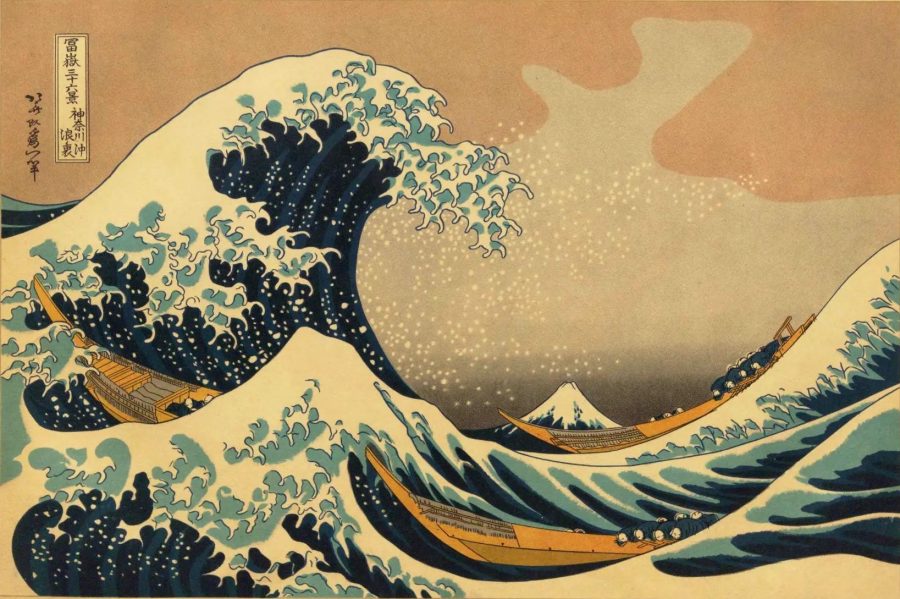
Katsushika Hokusai 《The Great Wave off Kanagawa》
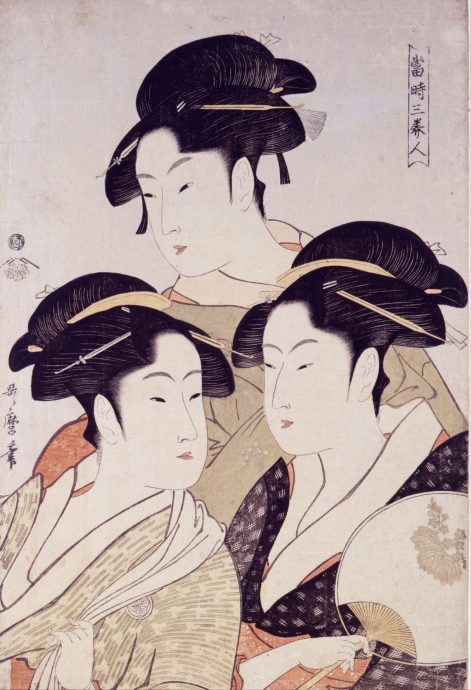
Kitagawa Utamaro 《Three Beauties of the Kwansei Period》
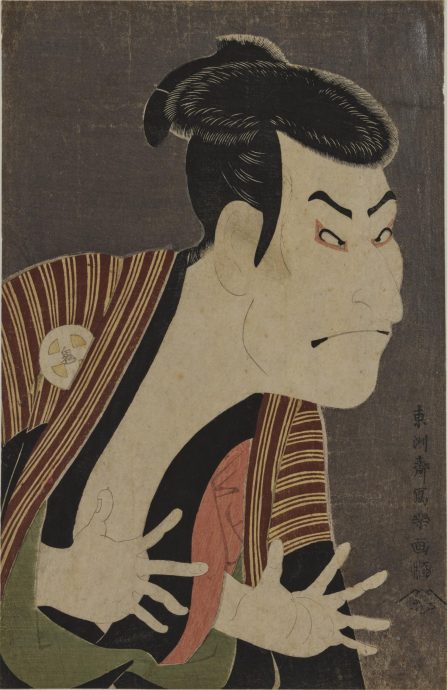
Toshūsai Sharaku 《The Actor Ōtani Oniji III as Edobei》
2. Art Born from Extreme Division of Labor and Artisan Skill
Ukiyo-e were cooperative creations, resulting from the extreme division of labor among specialized artisans. The Eshi (artist) would draw the composition and color design; the Horishi (carver) would meticulously carve the design, down to individual strands of hair, onto a wooden block; and the Surishi (printer) would layer colors using multiple blocks to complete the print.
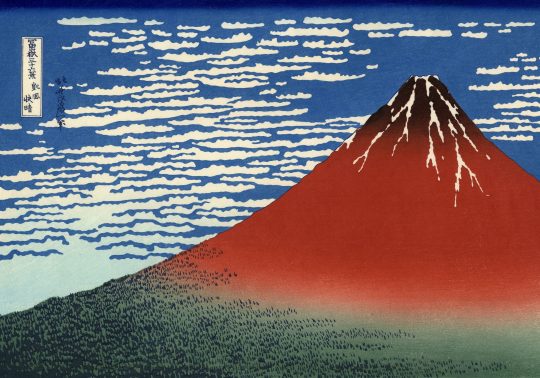
The high-level technique of layering colors with delicate pressure, guided only by the Kento (marks for alignment), produced Hokusai’s clear color planes in “Red Fuji” and the powerful, dynamic waves of “The Great Wave off Kanagawa.” The rich expressive power of Ukiyo-e stemmed from this seamless teamwork and division of labor across different skills.
-

- A block printer layering multiple colors
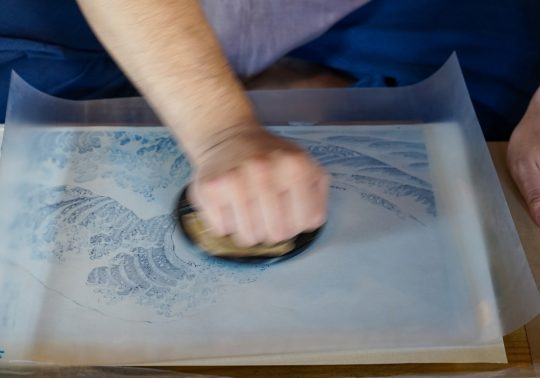
-
- Katsushika Hokusai 《Red Fuji》(Akafuji)
3. Innovative Perspectives: Bold Composition and a Leap in Viewpoint
One of the defining features of Ukiyo-e is its composition, which differs from Western painting. In Hiroshige’s “Evening Shower at Ōhashi Bridge”, heavy rain is depicted striking the upper portion of a vastly open space with diagonal lines. In “Kameido Umeyashiki,” the trunk of a plum tree in the foreground is dramatically cropped and magnified. This “daring compositional structure and bold trimming” presented a different spatial arrangement than the precise perspective found in Western painting.
When Ukiyo-e was introduced in Europe at world expositions in the latter half of the 19th century, its flat planes of color, bold composition, and strong outlines attracted attention as an “unknown visual language.” A boom occurred, centered in Paris, London, and Vienna. This movement, known as Japonisme, was the beginning of a revolution that shook the foundations of Western artistic sensibilities.
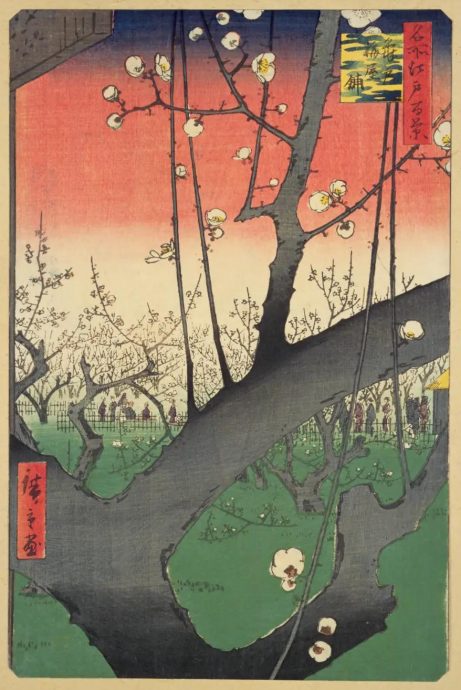
Utagawa Hhiroshige 《Kameido Umeyashiki》
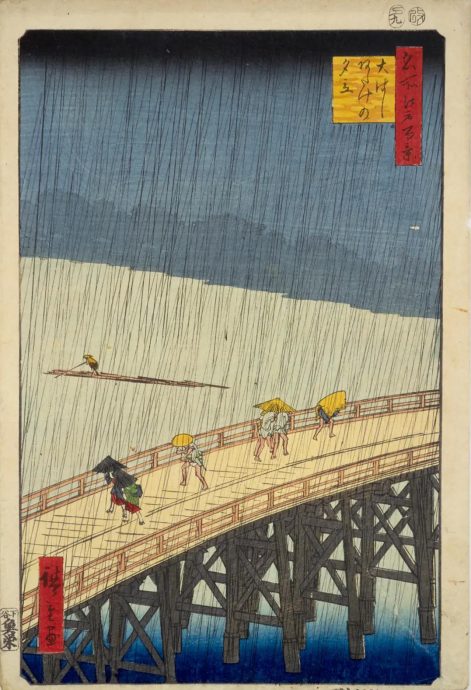
Utagawa Hhiroshige 《Evening Shower at Ōhashi Bridge》
4. The Impact on the West
Vincent van Gogh (1853-1890) deeply studied Hiroshige and translated “Evening Shower at Ōhashi Bridge” into an oil painting (Bridge in the Rain). The diagonal composition and strong color planes gave a new rhythm to Van Gogh’s work.
The Impressionist master Claude Monet (1840-1926) collected 231 Ukiyo-e prints. In his Water Lilies series, he uniquely reinterpreted the Japanese sense of negative space, flatness, and cropped compositions. Ukiyo-e had a profound impact on the artistic sensibility of Western modern art.
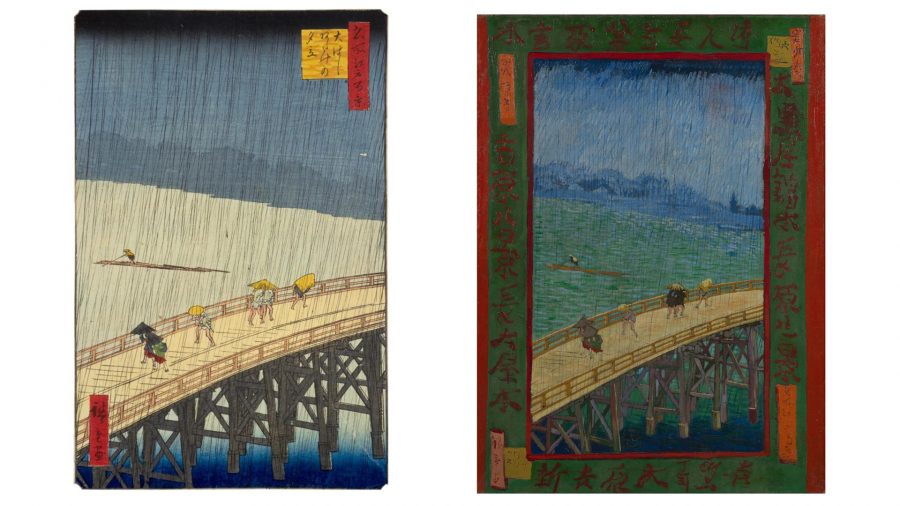
Comparison of Utagawa Hiroshige’s “Evening Shower at Ōhashi Bridge” and Vincent van Gogh’s “Bridge in the Rain”
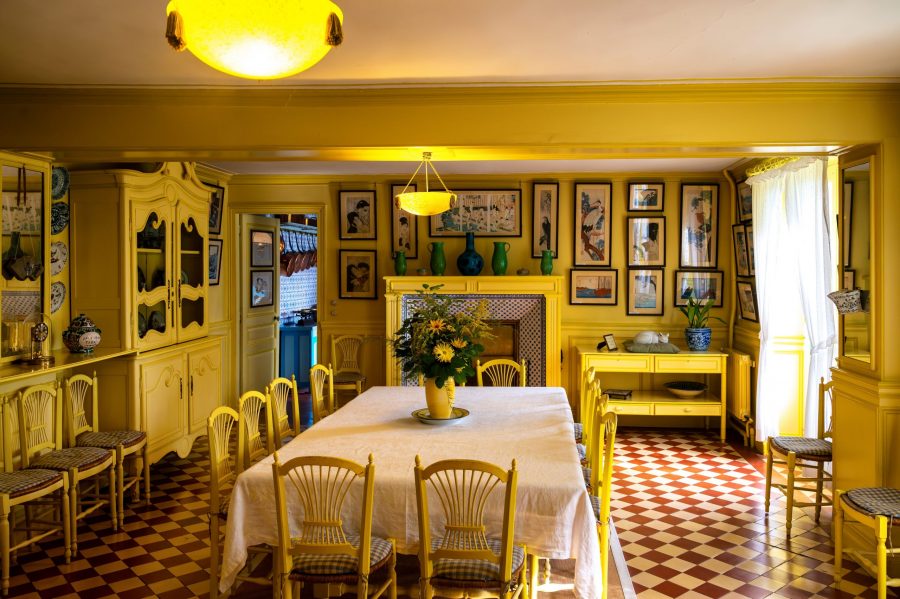
Monet’s Home
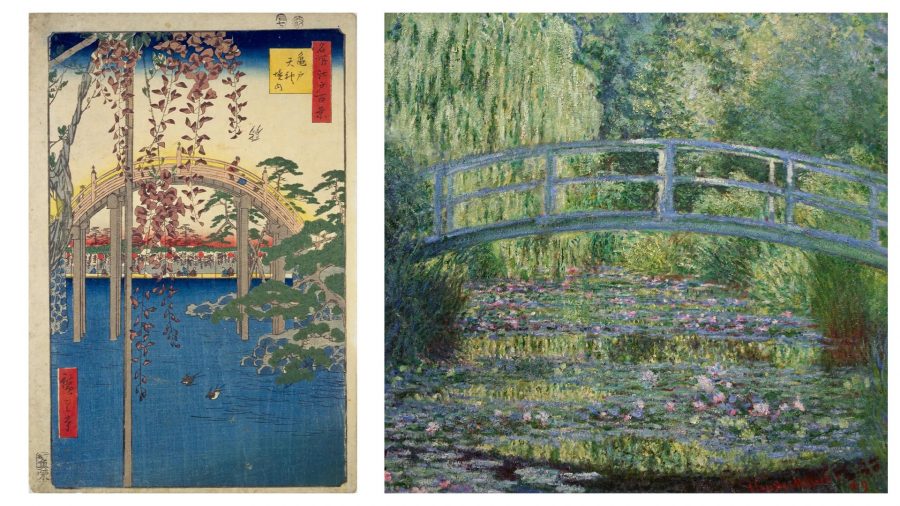
A Comparison of Utagawa Hiroshige’s “Kameido Tenjin Shrine Precincts” and Claude Monet’s “Water Lilies”
5. Experiencing Ukiyo-e: A Journey to the Source
The visual language created by the artisans of Edo—depth within a flat plane, the beauty of negative space, the free leap of perspective, and the bold arrangement of color—significantly influenced Impressionism, Art Nouveau, poster art, and glasswork across Europe in the late 19th century. Ukiyo-e is an art form that changed the world’s “way of seeing.”
Even today, Hokusai’s waves, Hiroshige’s snowy landscapes, and Utamaro’s beautiful women continue to captivate people worldwide. In Tokyo, you can find museums specializing in Ukiyo-e, such as the Ota Memorial Museum of Art and the Sumida Hokusai Museum, and the Tokyo National Museum also has a permanent Ukiyo-e exhibition room. By visiting the Japan Ukiyo-e Museum in Matsumoto City, Nagano Prefecture, or the facilities associated with Hokusai remaining in Obuse, you can witness the source of the visual revolution that spread from the late Edo period to the world. By engaging with the artworks through travel, you can personally experience the aesthetic sense and creativity of the Edo period.
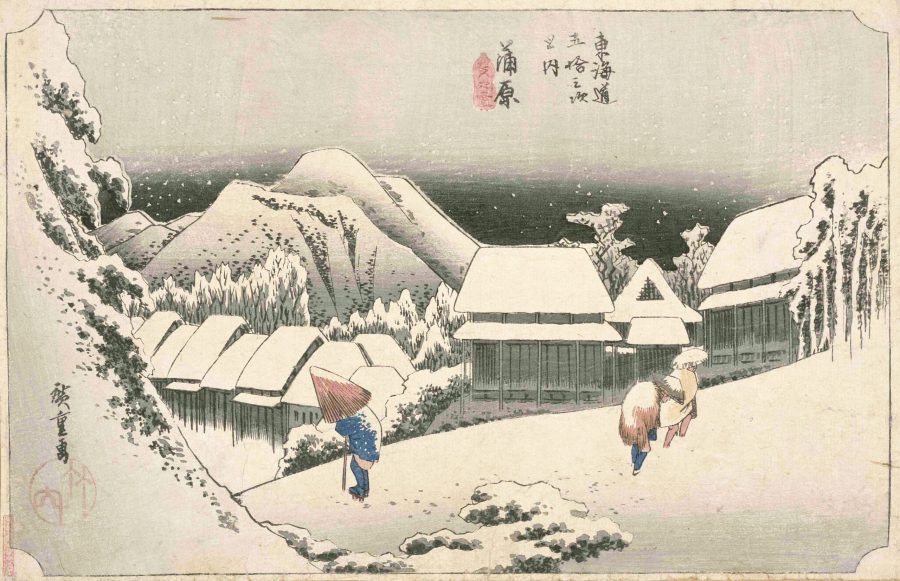
Utagawa Hiroshige 《Fifty-three Stages of the Tokaido Highway: Kanbara Station》
Travel Guide
| Spot |
Prefecture
|
|---|---|
| Tokyo National Museum | Tokyo |
| The Sumida Hokusai Museum | Tokyo |
| Ōta Memorial Museum of Art | Tokyo |