SUSHI: Edo’s Fast-Food Revolution
1. Sushi: Edo’s Fast Food Revolution
Today, sushi is a global icon of Japanese cuisine, often carrying the image of a luxurious, special occasion meal. However, the sushi of the Edo period was originally born as a fast food: a simple, stand-up dish, quickly prepared and quickly eaten at stalls and storefronts. It was the quintessential quick meal for the common people, optimized for the rapid rhythm of the city—this is the true origin of Edomae-zushi.
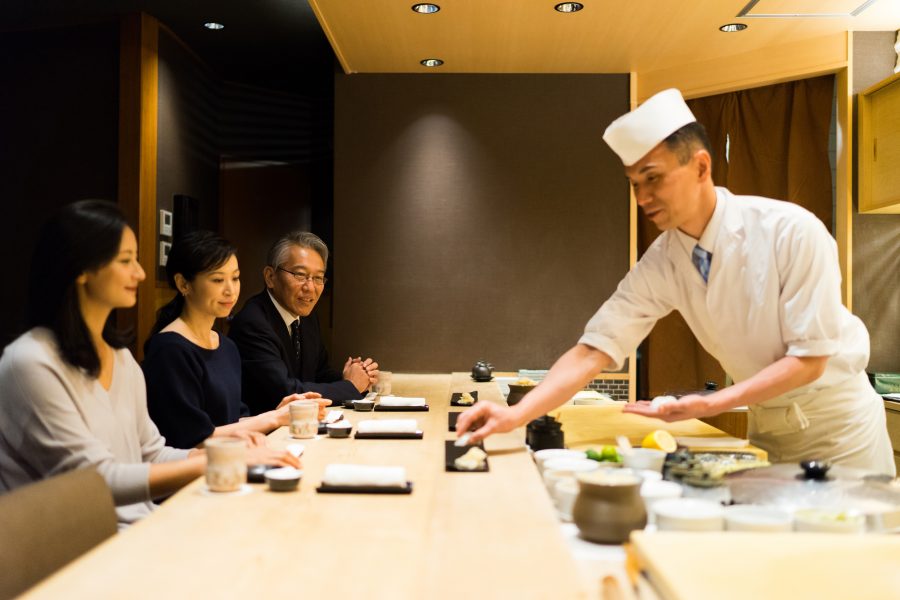
A modern-day sushi restaurant
2. What is Edomae-zushi? The Flavor and Preservation Born from A Little Extra Effort
The term Edomae (literally, “in front of Edo”) originally referred to the seafood caught in Edo Bay (now Tokyo Bay). Over time, however, the word evolved to encompass not just the geographical origin of the ingredients, but also the techniques and preparations cultivated by Edo’s chefs. Therefore, the essence of modern Edomae-zushi is characterized by the local seafood and the chef’s skill.
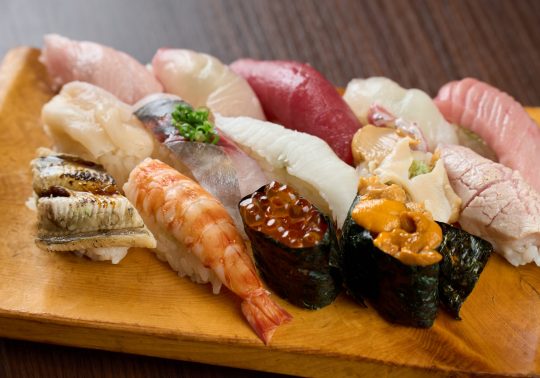
In an era without reliable refrigeration, chefs couldn’t simply serve raw fish. They developed treatments to balance both preservation and flavor creation. Methods like marinating (zuke) tuna in a soy-based sauce, curing (sujime) kohada (Gizzard Shad) with salt and vinegar, and simmering (niru) anago (conger eel) in a sweet sauce were practical, essential ways to extend the shelf life while simultaneously deepening the flavor. These careful preparations are the source of the rich aroma and umami of Edomae-zushi.
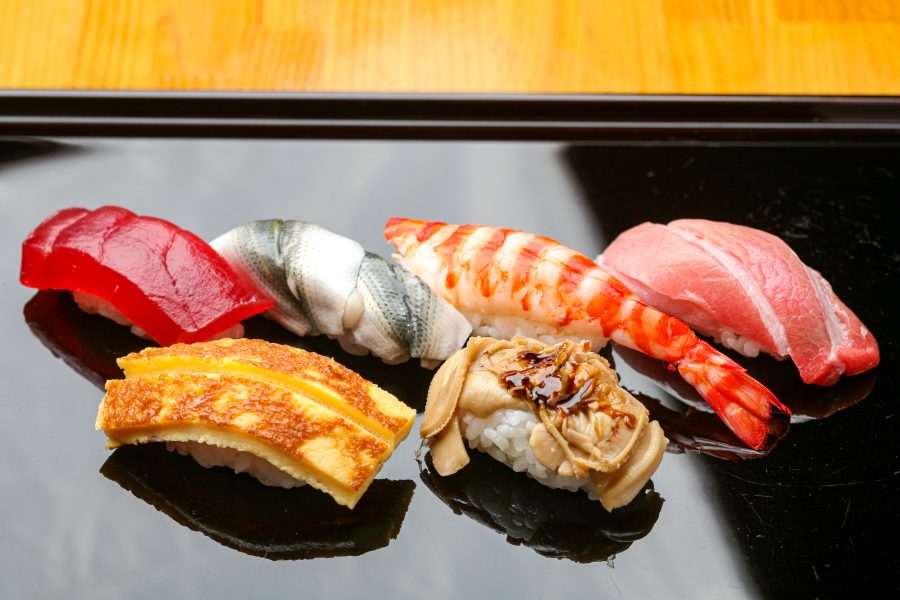
Edomae-zushi
3. The Quick Meal Culture of Edo, the City of One Million
When sushi was first created in the early 19th century, Edo was one of the world’s largest cities, boasting a population of over a million. Amidst the ceaseless activity of people and commerce, there was a high demand for meals that could be eaten quickly. Responding to this urban need, nigiri-zushi (hand-pressed sushi) was born: chefs would press the rice and topping right in front of the customer, who would then eat it while standing, often using their hands.
Sushi at that time was quite large, with a single piece being about the size of a rice ball. It is said that cutting these large pieces in half for easier consumption is the root of today’s standard practice of serving two pieces per order (though there are various theories). The impatient nature of the Edokko (Edo natives) and the need for speed in the giant city drove sushi’s evolution into a true fast food.
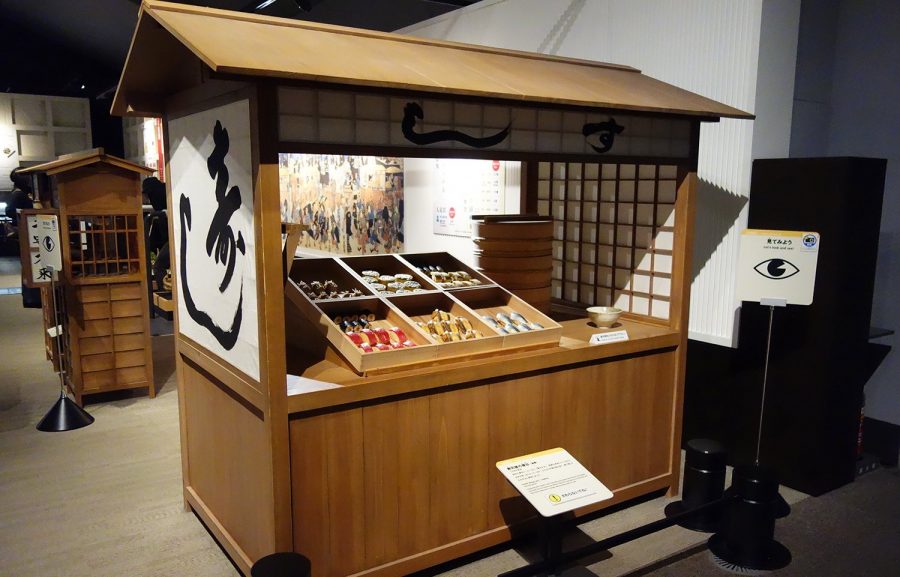
A recreation of an Edo-era sushi stand (Tokyo Metropolitan Edo-Tokyo Museum)
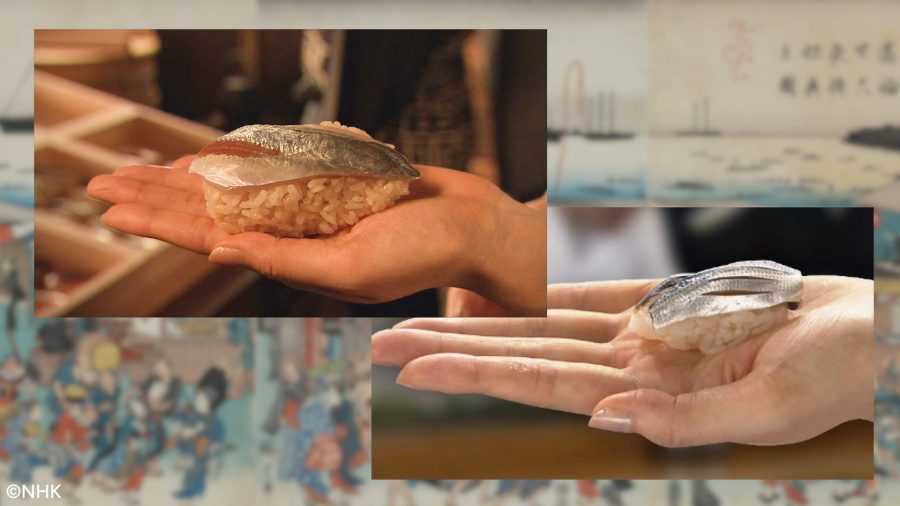
A comparison of Edo-era sushi and modern sushi
4. The Invention of Sushi Rice: The Flavor of Edo Preserved with Red Vinegar
The core of sushi is the rice, known as shari. Mixing freshly cooked rice with vinegar enhances its aroma, sharpens the flavor, and, importantly, makes it less prone to spoilage. In the Edo period, a red vinegar made from sake lees (leftovers from sake production) was widely used. It was characterized by a mellow acidity and a deep, savory richness. In an age when sugar was expensive, the inherent umami of the red vinegar served as a substitute for sweetness. This lightly colored “red shari” also made for a visually appetizing dish. Red vinegar rice paired perfectly with toppings prepared using zuke, sujime, and nikiri (reduced soy sauce), providing a strong foundation for the Edomae flavor.
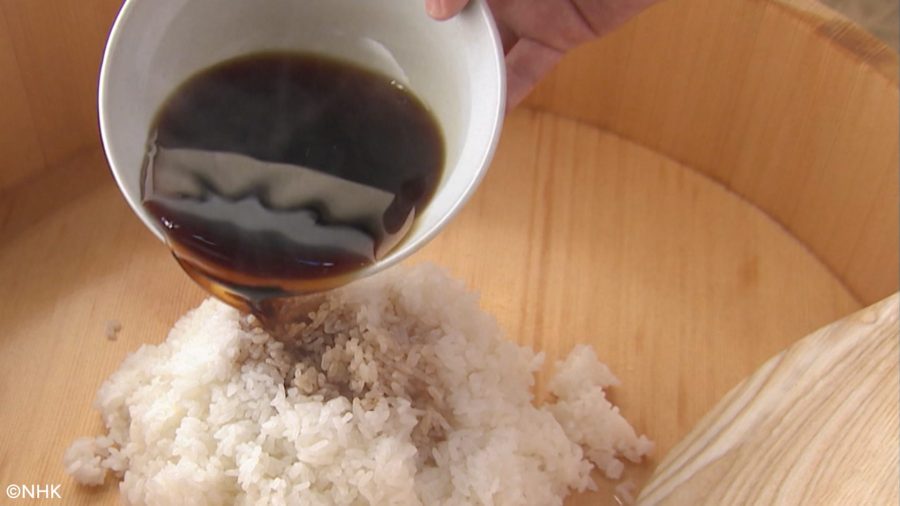
Red vinegar being mixed into rice
5. Essential Companions for Safe and Delicious Sushi
The “support crew” accompanying sushi on the table is indispensable for maximizing its flavor.
Wasabi (Japanese horseradish) reduces the fish’s raw odor, and its fragrance and spiciness provide a clean, refreshing aftertaste. Gari (pickled ginger) acts as a palate cleanser, resetting the mouth to ensure the next piece of sushi is enjoyed fully. Dark soy sauce adds umami and a sense of cohesion to the bite, and if a chef brushes on nikiri (reduced soy sauce) instead, it adds a gloss and savory aroma. These three elements were vital supporters that ensured sushi was both safe and delicious.
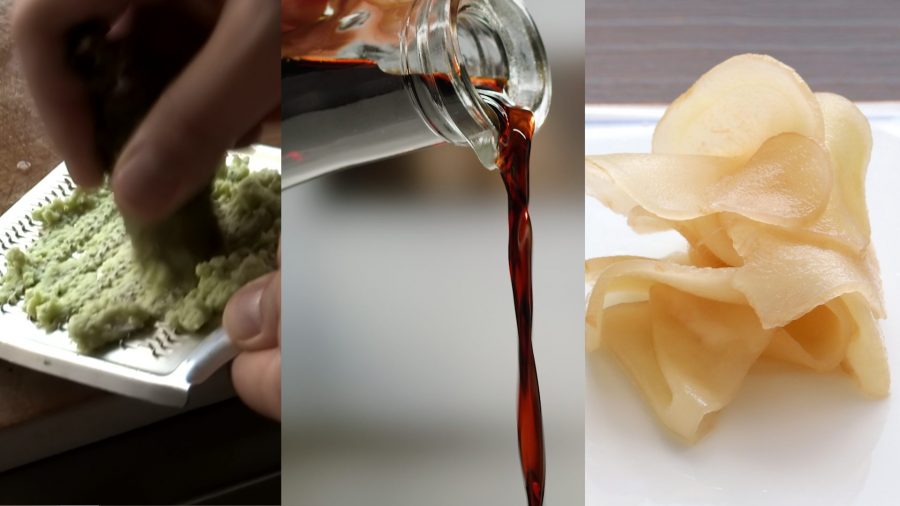
From left to right: wasabi, dark soy sauce, pickled ginger
6. The Diverse Sushi That Blossomed Across Japan
Sushi is not limited only to the nigiri-zushi of Edo. Diverse sushi cultures flourished across the country, adapted to local climates and transportation logistics.
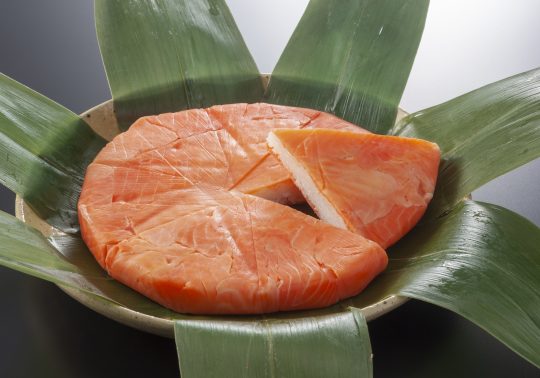
Toyama’s masu-zushi (Trout Pressed Sushi) is a type of oshi-zushi (pressed sushi) wrapped in bamboo leaves. It was designed to withstand the long journey to Edo and is famed as a delicacy that even Shogun Yoshimune praised.
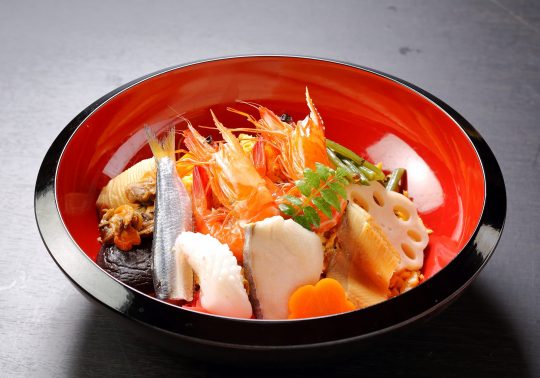
Okayama’s bara-zushi (Scattered Sushi) is a vibrant and festive dish topped with a bounty of seafood and mountain vegetables from the Setouchi region. The ingredients vary from family to family, reflecting the local life and traditions of the area.
These regional sushi dishes represent both local history and human ingenuity, making them cultural artifacts in their own right.
-

- Toyama’s masu-zushi
-
- Okayama’s bara-zushi
7. A Journey Through Sushi
Born on the bustling streets of Edo over 200 years ago, this quick bite has since become a worldwide phenomenon. Let’s delve into the history and culture behind the diverse sushi styles! From Tokyo’s Edomae-zushi to Toyama Prefecture’s masu-zushi and Okayama Prefecture’s bara-zushi, each piece tells a story, connecting the past, the present, and the land itself.
-
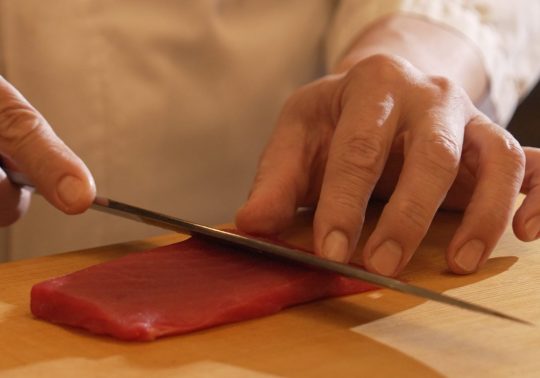
- Slicing a fish fillet
-
- Edomae sushi
Travel Guide
| Spot |
Prefecture
|
|---|---|
| The Tsukiji Outer Market | Tokyo |
| Okayama barazushi | Okayama |